The £4,000 Gap: How to Read Two Underfloor Heating Quotes from Nottinghamshire Installers
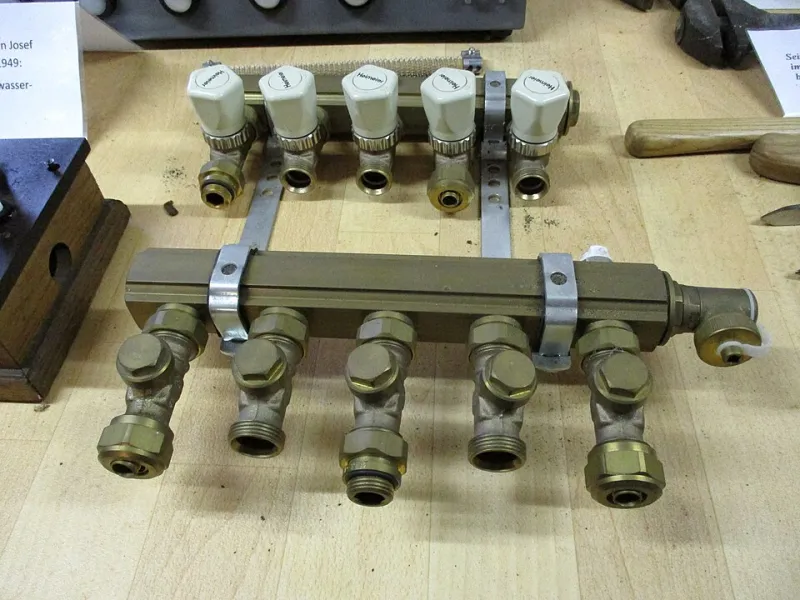
Photo: Dat doris, CC BY 4.0, via Wikimedia Commons
Two installers visit the same room in a Beeston semi. One quotes £6,200. The other quotes £10,400. Both say they are fitting wet underfloor heating. Both seem pleasant. So why the £4,000 gap? Sometimes it is profit, sometimes it is risk, but very often it is scope. The cheaper quote is not always a bad job and the dearer one is not automatically better. The trick is reading both properly.
Compare the scope before the total
Before you look at the bottom line, check that both quotes describe the same job. Room size, floor construction, finished floor height, floor finish, manifold location, controls, commissioning and warranty should all be stated. If one quote assumes a suspended timber floor and the other assumes a screed, you are not comparing like with like. If one includes insulation and the other leaves it to your builder, the totals are almost meaningless.
The line items that quietly vanish
Insulation boards or between-joist insulation is the classic omission. Underfloor heating works at lower temperatures, but it still needs insulation beneath it. A quote that leaves this out can look £800 to £1,500 cheaper and perform noticeably worse. Screed depth and type is another. A liquid screed at the right depth costs more than a token 20mm, and low-profile systems have different build-ups. Pipe spacing matters too. A 200mm spacing may be fine in a well-insulated new-build, but it is not the same as 100mm or 150mm in a draughty Victorian terrace. Then there is the manifold. A neat utility position may mean extra pipe, a pump, a blending valve and more labour. Controls and zoning are often trimmed: one thermostat instead of four, no actuators, no room-by-room control. Commissioning and pressure testing should be explicit. So should making good, waste removal and aftercare.
A bargain quote can be a different job
Imagine the £6,200 quote excludes insulation, uses 200mm pipe spacing, assumes the manifold can go in the airing cupboard and leaves commissioning to the plumber. The £10,400 quote includes 100mm insulation, 150mm spacing, a remote manifold, six zones, pressure testing, commissioning and a two-year workmanship warranty. The second is not £4,200 more expensive for the same thing. It is a larger, more specified job. That does not mean you should always buy the bigger scope. It means you should decide which scope you actually need.
Warning signs in a Nottinghamshire quote
Be wary of a quote with no heat loss calculation, especially for an older property. Ask how the installer arrived at the pipe spacing and output. Be cautious if floor build-up is not mentioned, or if the manifold location is described as 'to be confirmed'. A long warranty is only useful if the terms are written down and the company is still around to honour it. A large upfront deposit is another flag. So is a price per square metre that ignores room count, floor type and controls. And if the quote does not mention commissioning, pressure testing or building regulations where relevant, assume it is excluded until proven otherwise.
Questions to ask before signing
Ask what heat loss calculation has been used and whether it is room by room. Ask what the finished floor build-up will be, including insulation, pipe panels and floor finish. Ask for the pipe spacing and the reason behind it. Ask whether insulation is included and what U-value it achieves. Ask where the manifold will go, who will make good the cupboard and who pays for extra pipework. Ask what commissioning includes and whether you get a pressure test certificate. Ask what warranty covers labour as well as materials. Ask for a written list of exclusions. Finally, ask how payments are staged and what happens if the project overruns.
How to compare both quotes fairly
Put both quotes into a simple grid: insulation, pipe spacing, screed or low-profile build-up, manifold, controls, zoning, commissioning, making good, warranty and exclusions. Then ask each installer to re-quote to the same scope. A good installer will do it without drama. If one will not, you have your answer. The cheapest quote is only the cheapest if it delivers the same warm floor, with the same efficiency and the same aftercare. In Nottinghamshire, where older housing stock varies street by street, that difference is worth reading carefully.