The Chalky Little Secret in Your Manifold: Hard Water and Notts Underfloor Heating
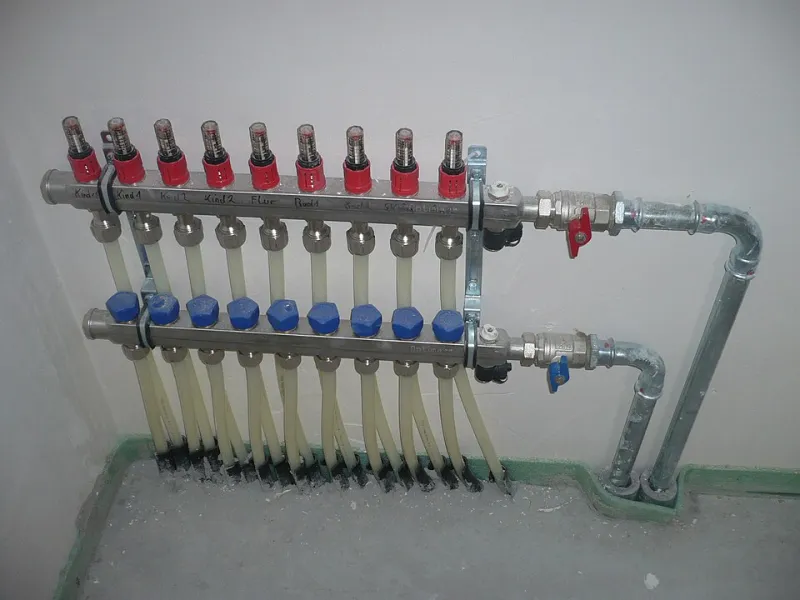
Photo: Tetris L, CC BY-SA 3.0, via Wikimedia Commons
Underfloor heating has a reassuringly simple reputation: pipes in the floor, warm water inside, cosy feet on top. And most of the time that's exactly how it behaves. But if you live in a part of Nottinghamshire where the kettle furs up faster than you'd like, there's a quieter conversation worth having about the water inside your system — especially the small, clever components tucked away in the manifold cupboard.
This isn't a scare story about warm floors dissolving overnight. It's a practical look at where hard water can cause bother, how to spot it early, and what a sensible routine looks like. Because the difference between a well-loved UFH system and a grumpy one is often not a major repair. It's a few small habits and a couple of good questions.
Why a sealed warm floor still deserves a water conversation
A sealed heating system shouldn't be constantly swallowing fresh water. Once it's filled, bled and dosed, the same water should circulate for years. That's good news: scale needs fresh minerals to keep building up, so a healthy sealed system in a hard-water area is not automatically a limescale factory.
The trouble starts when fresh water keeps finding its way in. A slow leak, a pressure gauge that gets topped up every few weeks, a DIY drain-down, a valve that weeps, or a system that was never properly commissioned — these all introduce new water and new minerals. In a Nottinghamshire home where the supply is on the harder side, repeated top-ups can leave deposits in exactly the places you don't want them: narrow passages, moving parts and anything that has to measure flow accurately.
So the first rule isn't 'panic about hard water'. It's 'keep the water in the system and keep the system water healthy'.
Where scale actually shows up in a Notts UFH system
The boiler or heat pump is usually the big-ticket item people worry about, but in an underfloor heating system the manifold deserves just as much attention. It's the control room: flow meters, blending valve, actuators, isolation valves, maybe a pump and a strainer. It lives in a cupboard, gets ignored, and quietly does a lot of work.
Scale and hard-water deposits tend to show up in a few familiar spots:
- Blending valves and small orifices. These mix flow and return water to keep the floor at a safe temperature. Narrow internal passages don't appreciate crusty build-up.
- Flow meters. If a meter starts sticking or reading oddly, it can make balancing the loops feel like guesswork.
- Strainers and filters. These are meant to catch debris, but a neglected strainer can become a collection point for sludge and mineral bits.
- Anywhere fresh water has been introduced repeatedly. That might be around fill points, valves or a pressure-relief arrangement that has been weeping.
It's worth separating scale from corrosion sludge. They're different problems, though they can share a cupboard. Corrosion sludge is usually black or brown and comes from metal components in the system. Scale is chalky and mineral-based. Both can interfere with flow, but the fixes and prevention aren't identical. A good installer will know the difference and won't just sell you a bottle of 'magic'.
The warning signs homeowners can spot without a toolbox
You don't need to become a heating engineer to notice the early clues. Keep an eye on these:
- Zones that used to heat evenly now lag behind. If one room feels cooler or slower to warm, it might be a flow issue rather than a floor covering problem.
- Flow meters that look stuck or inconsistent. A gentle glance at the manifold now and then is enough. You're not adjusting anything — just noticing change.
- Pressure that keeps dropping. A sealed system should hold its pressure. If you're topping it up regularly, that's a symptom to investigate, not a routine to accept.
- White crust or weeping around valves. A small chalky tidemark near a joint or valve is worth a photo and a call.
- Noise you didn't have before. Kettling, gurgling or a pump that sounds strained can point to flow or air problems.
None of these automatically means 'scale'. But in a hard-water county, they're good reasons to get someone competent to look before a small annoyance becomes an expensive afternoon.
Questions to ask at commissioning
The best time to deal with water quality is before the system settles into its routine. When you're getting quotes or booking installation, ask these plainly:
- Will you record the system water quality and what was put in it? A simple commissioning sheet with inhibitor type, dose and date is worth more than a vague promise.
- Is the system being filled and flushed properly? Fresh water plus a dirty system is a poor start. Ask how they flush and whether they use a cleaner if needed.
- What inhibitor is going into the system, and why that one? Corrosion inhibitor is standard for sealed heating systems. Scale inhibitors are a different conversation. If one is suggested, ask what problem it's solving.
- How will you check for leaks before handover? Pressure testing matters. A system that holds pressure is less likely to need repeated top-ups later.
- What should I do if the pressure drops? Get a clear answer. 'Just top it up' is not a full answer if it happens often.
A decent installer won't be offended by these questions. They'll probably be pleased you asked.
A sensible top-up routine, not a chemistry set
You don't need to test your heating water weekly like a swimming pool. A modest routine is enough for most homes:
- Check the pressure cold, not hot. Know what normal looks like for your system.
- Don't top up out of habit. If pressure keeps falling, find the reason. Repeated fresh water is the enemy here.
- Fix weeping valves promptly. A tiny drip is easy to ignore and easy to fix.
- Have the inhibitor checked every few years. Some installers will test it at service time; others will recommend a drain, flush and re-dose at a sensible interval. Ask what they recommend for your system, not a generic timetable.
- Keep a small log. Date, pressure reading, any top-up, any work done. It takes two minutes and makes future diagnosis much easier.
- Leave the manifold alone. Unless you've been shown how to adjust it, don't twiddle flow meters or valves for entertainment.
If you're on a very hard supply and you've had repeated top-ups, a water test or a proper system health check can be money well spent. But for most Nottinghamshire homes, the priority is simple: keep the system sealed, keep it dosed, and don't keep introducing fresh water.
The bottom line
Hard water is part of life in much of Nottinghamshire, but it doesn't have to become part of your underfloor heating's personality. The manifold is the place to watch, the pressure gauge is the habit to keep, and commissioning is the moment to get the paperwork right. A warm floor should feel effortless. A little attention to the water inside it is what keeps it that way.