Four Paws on a Warm Floor: A Pet-Friendly Underfloor Heating Guide for Notts Homes
Photo: anonymous , Public domain, via Wikimedia Commons
If you share a Nottinghamshire home with a dog or cat, you already know the drill: the best spot in the house is wherever the sun lands, and if that happens to be a warm floor, even better. Underfloor heating and pets are a natural match — but there are a few practical details worth getting right, from surface temperatures to muddy paws and the rug your cat has claimed as its own.
What Floor Temperature Is Comfortable for a Dog or Cat?
Pets can't tell you when a floor is too warm. Most domestic underfloor heating systems run at a floor surface temperature somewhere in the mid-to-high 20s Celsius, which is generally comfortable for animals as well as people. The key is not the boiler flow temperature — that might be 35°C or higher — but what actually reaches the surface. A floor sensor thermostat gives you that reading directly.
Cats are famously heat seekers and will flop on a warm bathroom tile without complaint. Dogs vary hugely: a short-haired whippet may stretch out on the warmest patch, while a thick-coated breed might move to a cooler hallway. If your dog is panting, restless or seeking cold surfaces, the floor is probably too warm for them. Turn the zone down a notch rather than banning the dog from the kitchen.
Muddy Paws and Wet Coats: Cleaning Without the Drama
A warm floor dries quickly, which is handy when a November walk ends with four muddy paws. But don't treat underfloor heating as a giant drying rack. Wipe paws at the door with a microfibre mat or towel, then clean the floor with a pet-safe cleaner rather than a soaking mop. Standing water on engineered wood or laminate is never a good idea, even when the floor is warm underneath.
A washable runner by the back door is your friend. So is a simple routine: mat outside, mat inside, towel by the door. In homes around West Bridgford, Beeston and Bingham, where dogs often come in from parks and towpaths, that little landing zone saves a lot of mopping.
Beds, Blankets and the Rug Trap
Thick rugs and deep-pile carpets trap heat. If you have a warm floor, a heavy rug in the middle of the room can make the system work harder in that zone while leaving the surrounding floor cooler. That's not dangerous, just inefficient. Breathable runners and low-pile rugs are a better compromise, especially in rooms where pets sleep.
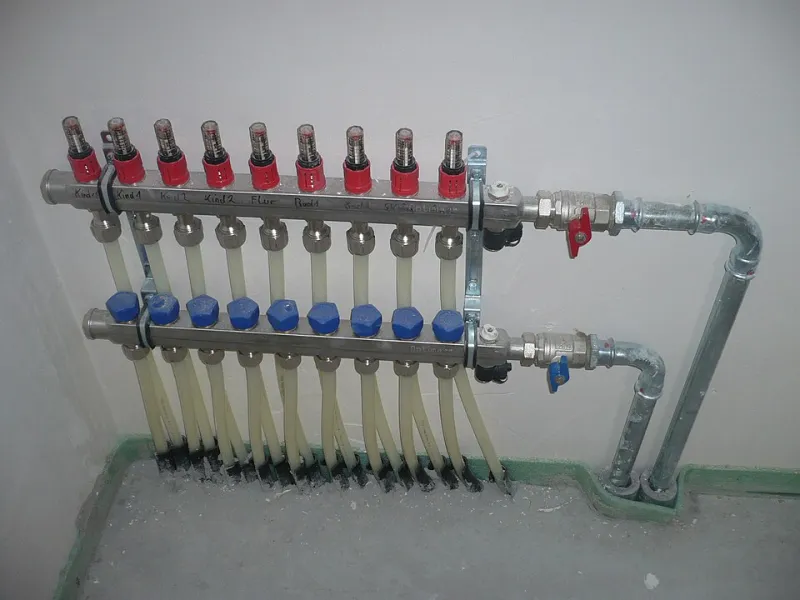
A raised pet bed with a breathable base is usually better than a thick foam bed pressed directly onto a heated floor. Cats will find the warmest spot regardless — often the manifold cupboard or a sunny windowsill — so don't be surprised if the expensive bed goes unused. Keep pet beds away from direct heat sources and make sure your pet can move to a cooler spot if they want to.
Zoning and Thermostats for Pet Households
If your home has zones, use them. A dog that sleeps in the kitchen doesn't need the spare bedroom warm. A cat that lives in the conservatory doesn't need the whole house at the same temperature. Set the pet's favourite room to a comfortable background warmth and leave rarely used rooms lower.
Programmable thermostats are useful for pet owners who work away from home. You can keep a gentle background temperature during the day without heating every room to evening levels. If your system has a floor sensor, trust it over the air thermostat when setting the limit — it tells you what your pet is actually lying on.
Floor Coverings and Claws
Tile and luxury vinyl tile cope well with claws, muddy paws and the occasional accident. Engineered wood looks lovely but can scratch; keep claws trimmed and use mats at doors. Laminate can swell if water gets into the joints, so wipe up accidents promptly. Carpet is soft underfoot but adds resistance; if you choose it, go for a low-tog underlay and a carpet that's suitable for underfloor heating.
The Running-Cost Reality
Pets at home all day can mean longer heating hours, but you don't need to heat the whole house for one cat. Zoning, a sensible schedule and a floor sensor will do more for your bills than any gadget. In older Notts terraces, draughts and suspended floors matter too — a warm floor can't fix a leaky back door. Get the basics right and the running costs stay reasonable.
A Simple Pet-Friendly Setup
Mat by the door. Pet-safe cleaner. Breathable bed. Floor sensor set to a sensible limit. Zones that match how you and your pets actually live. That's most of it. Underfloor heating doesn't need a special pet mode; it needs a bit of thought about where the warm spots are and who claims them. If you're planning a system, ask your installer about floor sensors and zoning — your dog will thank you in the only way it knows how, by lying exactly where you need to walk.