Ratings, Reality and Warm Floors: Will Underfloor Heating Lift Your Nottinghamshire EPC?

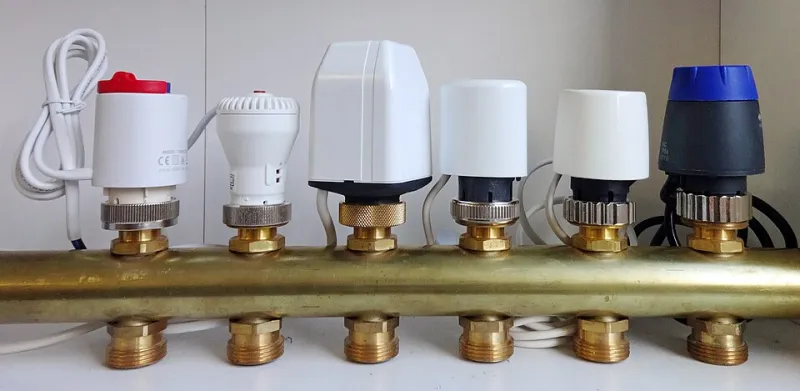
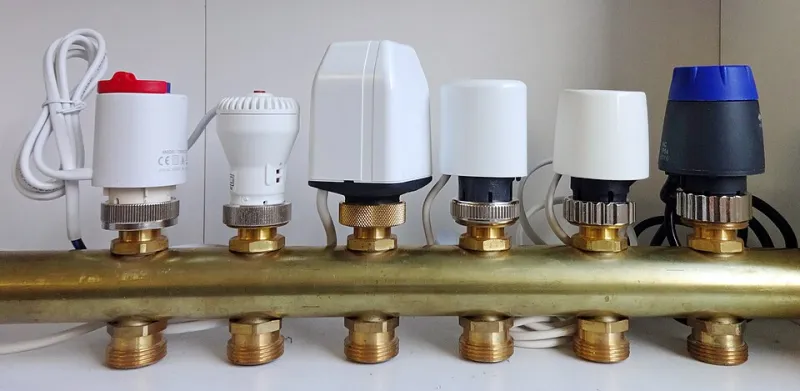
Photo: Mr.ちゅらさん, CC BY-SA 4.0, via Wikimedia Commons
There is a sentence that turns up in a lot of underfloor heating brochures: “Improves your EPC rating.” It is not exactly a lie, but it is doing a lot of heavy lifting. If you are a Nottinghamshire homeowner weighing up warm floors before a house move, a remortgage or a retrofit assessment, it is worth knowing what an energy performance certificate can actually see — and what it cannot.
What the assessor is really looking at
An EPC is not a comfort survey. It is a cost-based model, built on RdSAP, that assumes a standard occupancy pattern and a standard heating regime. The assessor walks the property, notes the construction, insulation, glazing, lighting, heating system, fuel type and controls, then feeds it into software that spits out a band from A to G.
Underfloor heating is not a tick-box line item. There is no field marked “has warm floors” that automatically nudges you from D to C. What the assessor records is the primary heating system — boiler, heat pump, electric storage, and so on — along with its efficiency and the controls that manage it. The floor itself is mostly invisible to the model.
That is the first thing to get straight: an EPC credits the system that generates heat and the controls that stop it running when nobody needs it. It does not credit the pleasant feeling of padding to the kettle in bare feet.
Where warm floors genuinely help
There are real routes from underfloor heating to a better rating, but they tend to be indirect.
The biggest one is heat pumps. Wet underfloor heating runs happily at lower flow temperatures than radiators, which is exactly what an air source heat pump wants. If you are replacing a gas boiler with a heat pump and you have UFH, the heat pump can run more efficiently. That efficiency is recorded, and it can lift the rating. The credit belongs to the heat pump and the low-temperature distribution together — not to the floor as a standalone product.
Controls are the second route. Zoned manifolds, room-by-room thermostats, weather compensation and smart scheduling all give the assessor something concrete to record. A well-controlled system that heats only the rooms you use looks better on paper than a single blunt thermostat in the hallway. If your installer fits proper controls, keep the documentation — it is part of the story.
Where the marketing outruns the modelling
This is where homeowners get caught out. Two common scenarios:
Electric underfloor heating in a bathroom. It feels lovely. But the assessor may record it as secondary electric heating, and electricity is expensive per kilowatt hour in the EPC’s cost model. A small mat in one room is unlikely to move a band, and in some cases a poorly specified electric system can look worse than the gas radiator it replaced. It is a comfort upgrade, not an EPC upgrade.
Wet underfloor heating bolted onto an old gas boiler. If the boiler still runs at 70°C and the UFH is blended down, the EPC sees the same boiler it saw before. The floor is warmer, the rating is not. Replacing radiators with UFH is a lifestyle decision in this scenario, not an efficiency one.
The claims that do hold water usually assume a package: heat pump, UFH, loft insulation, cavity wall insulation where possible, maybe solar. The floor is one part of a whole-house story. Sold on its own, the EPC bump is often smaller than the brochure implies.
The paperwork that tells the story
Assessors can only record what they can evidence. If your underfloor heating was part of a heat pump installation, keep the MCS certificate. If it was commissioned with a controls schedule, keep that too. Building regulations completion certificates, installer commissioning sheets and manufacturer manuals all help paint a picture.
This matters most when the system is unusual or when the assessor is unfamiliar with the setup. A clear folder — the kind you might hand over when selling — saves guesswork. It also helps if you are applying for a green mortgage or a retrofit grant where the lender or scheme wants proof of what was installed and when.
Timing it: sale, remortgage, retrofit assessment
If you are selling, an EPC is a legal requirement and it lasts ten years. If you are remortgaging, a lender may ask for one, especially for green mortgage products. If you are having a retrofit assessment, the assessor will model your home as it stands today.
In all three cases, the order matters. Upgrading the heating system after the assessment means the certificate will not reflect it. If you are planning a heat pump and UFH anyway, and an assessment is imminent, it is worth talking to your installer about sequencing. But do not rip out a working boiler purely to chase a band — the payback rarely stacks up, and the disruption is real.
A Nottinghamshire reality check
Housing stock around here varies enormously. A solid-walled Victorian terrace in Carlton has different starting points from a 1930s semi in West Bridgford or a new-build in Edwalton that already sits at a B. In older homes, fabric improvements usually move the needle more than the heat emitter. In newer homes, the rating may already be high enough that UFH is a comfort choice rather than a rating strategy.
A good local installer will tell you which of those situations you are in. A less good one will promise a band jump without asking about your walls, your boiler or your controls.
The bottom line
Underfloor heating can contribute to a better EPC, but almost never on its own. It helps most when paired with a heat pump, proper zoning and a well-insulated building — and when the paperwork is there to prove it. Treat the “EPC bump” as a possible bonus of a wider upgrade, not the reason to dig up your ground floor. Warm feet are lovely. Just do not expect the certificate to say so.