Meter Reading, Not Guesswork: A Half-Hourly Audit for Nottinghamshire Underfloor Heating Bills

Most of us treat the smart meter like a smoke alarm: we know it is there, we hope it never makes a fuss, and we rarely investigate what it is actually telling us. Yet for anyone running underfloor heating in a Nottinghamshire home, the half-hourly data sitting in your supplier's app is one of the most useful diagnostic tools you already own. It will not tell you the temperature of your floor, but it will show you when the system is working, when it is idling, and when something else in the house is quietly hogging the heat.
This is not about becoming an energy analyst. It is about spending half an hour with a spreadsheet, a few cold-morning observations, and a brew, then making two or three small changes that show up on the next billing cycle.
Why half-hourly data beats a monthly bill
A monthly bill tells you the punchline. Half-hourly data tells you the story. Underfloor heating is a slow, steady system: it tends to run in long, low bursts rather than the short, sharp cycles of a radiator. That makes it particularly easy to spot in meter data — and particularly easy to misread if you only look at the total.
If your January bill is higher than you expected, the cause could be a manifold pump left on standby, a zone valve stuck open, a hot water cylinder reheating at the same time every morning, or a schedule that drifted by two hours when the clocks changed. Each of those has a different shape in the data. Once you can see the shape, you can stop guessing.
Getting your hands on the numbers
Start by downloading your half-hourly consumption data from your energy supplier's app or website. Most UK suppliers now offer a CSV export, usually covering the last few months. If you cannot find it, ask customer services for a half-hourly export — it is your data and they should provide it without much fuss.
You want three columns: date, time, and electricity used in kWh. If you have gas underfloor heating, the same principle applies through your smart gas meter or boiler app, though the half-hourly resolution may be coarser. For this exercise, electricity is the easier place to start because so many Nottinghamshire warm-floor systems rely on a manifold pump, zone valves, and controls that all draw power.
Next, grab the outdoor temperature for the same period. The Met Office and a handful of weather apps offer historical data for Nottingham, Mansfield, Retford, or Bingham. You do not need anything fancy — a daily average and a note of the coldest nights will do.
Build a simple picture, not a masterpiece
Put the meter data into a spreadsheet and create a line chart of daily usage. Then add a second chart of daily average outdoor temperature. You are looking for the relationship between the two. In a well-behaved system, cold days should push usage up and mild days should let it fall. If usage stays stubbornly high during a mild spell, that is your first clue.
Now zoom into a few individual days. Pick a mild day, a cold day, and a day when the house was empty. Compare the half-hourly shapes. A healthy underfloor heating system often shows a gentle ramp-up in the early morning, a plateau through the day, and a taper in the evening. What you are looking for are the oddities: sudden spikes, long flat lines at 3am, or heating that comes on long before anyone is awake.
The signatures worth knowing
The overnight plateau
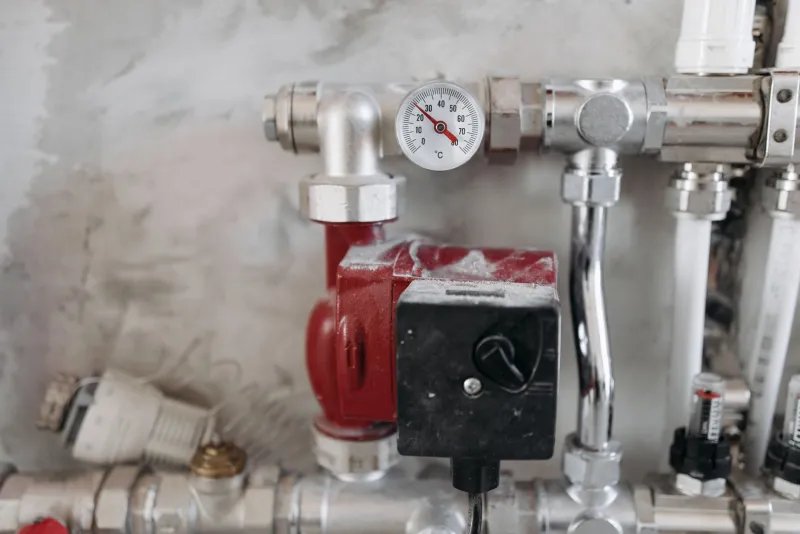
If you see a steady draw of 100 to 300 watts running through the night, every night, even when the heating is off, suspect the manifold pump or a control box in standby. It is rarely huge, but it adds up. A pump left on constant speed rather than set to a smart or weather-compensated mode is a common culprit in older Nottinghamshire installations.
The morning hot-water spike
A sharp spike around 6am or 7am is often the hot water cylinder reheating rather than the floor. That is not necessarily a fault, but it matters when you are trying to work out what the underfloor heating is costing. If the spike coincides with a boost button being pressed, you have found a habit worth changing.
The stuck zone valve
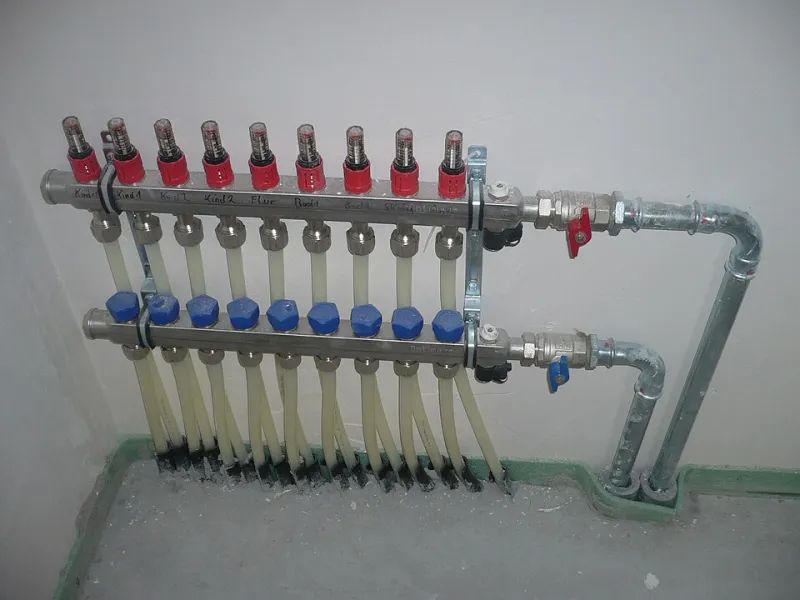
If one room is warm when it should not be, and the meter shows the heating drawing power at times when that zone is scheduled off, a zone valve may be stuck open. It is a cheap part and a quick fix for a heating engineer, but it can waste a surprising amount of energy over a winter.
The schedule drift
Many homeowners set a schedule in autumn and never revisit it. When the clocks change, or when a new boiler is fitted, the timing can drift. Look for heating that starts an hour or two before it should, or runs past the point where the house is clearly up to temperature. A quick check of the programmer against the meter data will confirm it.
Turn the patterns into a short fix list
You do not need to overhaul everything at once. Aim for three actions:
- Check the pump setting. Ask your installer whether the manifold pump is on constant speed or a smarter mode. If it is running flat out overnight, that is easy money to reclaim.
- Audit the zone valves. If a room is warm out of hours, get it looked at. Do not wait for summer.
- Revisit the schedule. Match the heating times to when the house is actually occupied, not when it used to be. A Nottinghamshire semi that is empty from 8am to 5pm does not need a floor at full temperature all day.
Write those three things down and put them somewhere you will see them. The point of the half-hourly audit is not to become a spreadsheet enthusiast; it is to give your installer — or your future self — a clear, evidence-based brief.
A word on weather and expectations
Underfloor heating is slow to respond, so a cold snap will always show up in the data a day or two later than you might expect. Do not panic at a single high day. Look for repeated patterns across a fortnight. And remember that a warm floor in a well-insulated West Bridgford semi will behave very differently from one in a solid-walled Carlton terrace. The data is there to help you understand your home, not to compare it unfairly with someone else's.
If the numbers still look odd after your audit, that is the moment to call a local installer with your CSV and your notes. A good Nottinghamshire underfloor heating engineer will thank you for it. You have done the detective work; they can do the fix.