Warm Floors, Quiet Bills: The Ten-Year Maintenance Pot for a Nottinghamshire UFH System
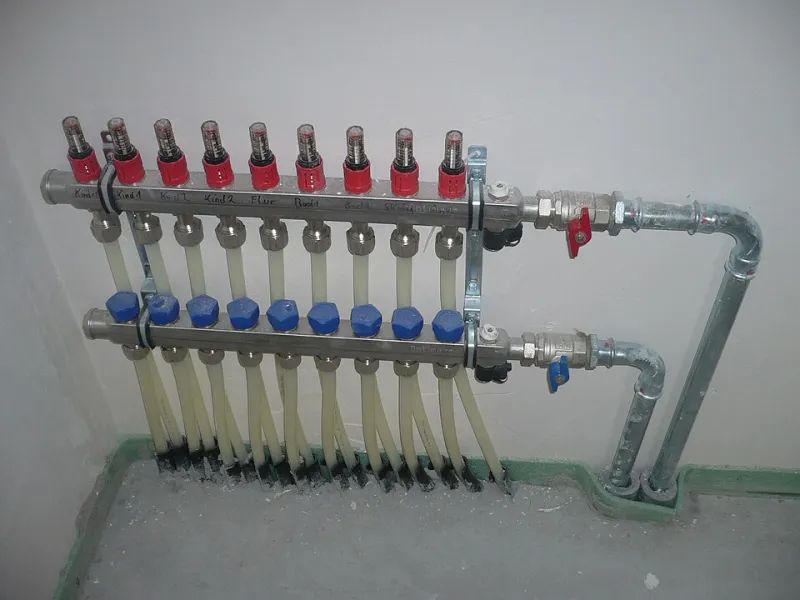
Photo: Tetris L, CC BY-SA 3.0, via Wikimedia Commons
Underfloor heating has a lovely sales pitch: fit it, set the thermostat, forget it. For most Nottinghamshire homes, that is broadly true. Wet UFH is not a temperamental old boiler, and it does not demand much attention. But fit-and-forget is not quite the same as cost-nothing-after-installation. The expensive moment is rarely a dramatic midwinter failure. More often, it is a cluster of smaller bills that arrive quietly over several years and then feel like a shock because nobody mentioned them at quote stage.
So let us talk about the warm-floor pot: a realistic ten-year maintenance budget for a typical Notts home with a wet underfloor heating system. Not to frighten anyone, and not to suggest you need a service contract with a gold-plated clipboard. Just a sensible plan so a pump replacement or a set of actuators does not land on the same month as the car MOT.
The cost that lives outside your energy bill
Energy is the visible cost. You see it in the monthly direct debit, and you can nudge it by changing floor coverings, zoning or thermostat habits. Maintenance is the quieter cost. It hides in the utility cupboard, in the manifold, and in the small electrical bits that open and close valves. For a six-to-eight-zone wet system in a Nottinghamshire semi or terrace, a reasonable long-term view is to set aside roughly £15 to £30 a month. That is not a quote, and it is not a rule. It is a buffer, and buffers beat surprises.
What actually wears out on a wet UFH system
Start with the manifold and pump. The manifold itself is mostly brass and plastic, so it can last a long time, but seals, valves and moving parts do not last forever. The circulation pump is the hardest-working component and is the one most likely to need replacing within a decade. A noisy pump is not always about to fail, but it is worth having someone listen to it.
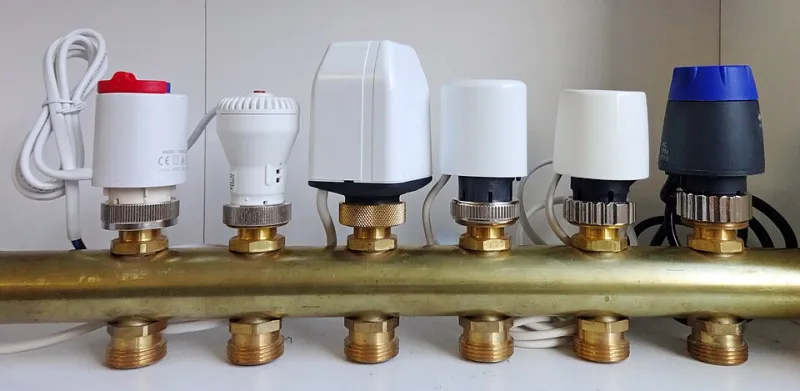
Actuators and thermostats are the next quiet spend. Actuators are the little motors that open and close each heating loop. When one fails, a room can stay cold or stay warm when it should not. They are not expensive individually, but a house with eight zones may replace two or three over ten years. Thermostats last well, though batteries, screens and wireless receivers can become tiresome.
The blending valve and temperature sensors matter more than they look. They control the water temperature going into the floor, which protects the screed and keeps the system efficient. A sticky blending valve can make the whole system feel sluggish. Inhibitor top-ups are also part of the picture for many wet systems. Glycol is usually only needed where frost risk is real, such as an outbuilding or a rarely used garden room. In a normal Nottinghamshire house, inhibitor is the more common concern.
Electric underfloor heating is a different budget. There is no pump, manifold or inhibitor. The main long-term cost is usually a thermostat, and perhaps a mat repair if someone drills through it. That is why electric systems can feel almost maintenance-free. Wet systems are low-maintenance too, but they have more parts wearing quietly in the background.
A realistic ten-year budget for a typical Nottinghamshire home
Assume a well-installed six-to-eight-zone wet system in a typical Notts house, using 2026 prices. The ranges below are deliberately broad because access, brands and labour vary across West Bridgford, Carlton, Mansfield, Newark and the villages in between.
| Item | Likely ten-year cost |
|---|---|
| Annual check or basic service | £800 to £1,500 |
| Actuator replacements | £70 to £280 |
| Thermostat replacement or refresh | £70 to £320 |
| Circulation pump | £180 to £350 |
| Blending valve or service kit | £120 to £250 |
| Inhibitor top-ups | £80 to £180 |
| Contingency | £300 to £500 |
| Total pot | £1,600 to £3,000 |
That works out at roughly £13 to £25 a month over ten years. Add a little more if your system has more zones, if access is awkward, or if you want the reassurance of a maintenance plan. The point is not the exact figure. The point is that a four-figure bill should be a planned event, not a mystery.
What tends to land at year three, five and ten
Year three is often the first small spend. An actuator may stick, a thermostat battery may need changing, or an annual check may flag a pressure issue. This is also a good time to check inhibitor levels if your installer recommends it.
Year five is where the budget starts to earn its keep. Actuators can fail in small groups, the blending valve may benefit from a clean or service kit, and the pump may start to sound less refined than it did. None of this is automatic, but it is the middle stretch where small parts begin to age.
Year ten is the sensible review point. The pump may have been replaced already, or may be living on borrowed time. Manifold seals and thermostats may be due a refresh. If the system has been well looked after, year ten might be a modest check and a fresh inhibitor top-up. If it has been ignored, it can be the moment several small jobs arrive together.
The warm-floor pot: a sinking fund without the spreadsheet
You do not need a finance app or a colour-coded binder. Open a separate savings account, set up a standing order for £20 to £30 a month, and label it something clear like warm floor. When the annual check comes, pay from that pot. When an actuator fails, pay from that pot. If the pot grows to £500 and nothing has happened for two years, good. That is the buffer doing its job.
Review the amount every few years. If you have a big system with ten zones and a heat pump, lean towards the higher end. If you have a small two-zone setup in a well-insulated new-build, the lower end may be plenty. The aim is not to predict the future with precision. It is to avoid the financial flinch when a perfectly normal part finally wears out.
Repair or replace? The decision point
A single actuator at £50 or £70 is an easy fix. A pump at £250 on a twelve-year-old system is usually worth repairing if the rest of the manifold is healthy. The harder question comes when a repair is no longer good value: an obsolete manifold with no spare parts, repeated leaks, a pump that has already been replaced twice, or a repair bill that is more than half the cost of a new manifold and controls. At that point, ask for an itemised quote and a plain-English explanation of what happens if you do nothing. A good Nottinghamshire installer should be happy to give you that, not just a price.
Avoiding the four-figure surprise
Keep the handover folder. Write the manifold model and pump model on the inside cover. Note the date of the last service and who did it. Take a photo of the manifold before anyone works on it. Book a check in early autumn rather than waiting for the first cold snap, when every heating engineer in Notts is already busy. And ask at commissioning what the expected wear items are, so you know what you are budgeting for.
A warm floor is a long-term household appliance, not a one-off treat. Treat it like one and the quiet costs stay quiet. The ten-year pot will not make underfloor heating free, but it turns the slow burn into a manageable trickle.