Lights Out, Floors Cold: A Notts Blackout Plan for Underfloor Heating
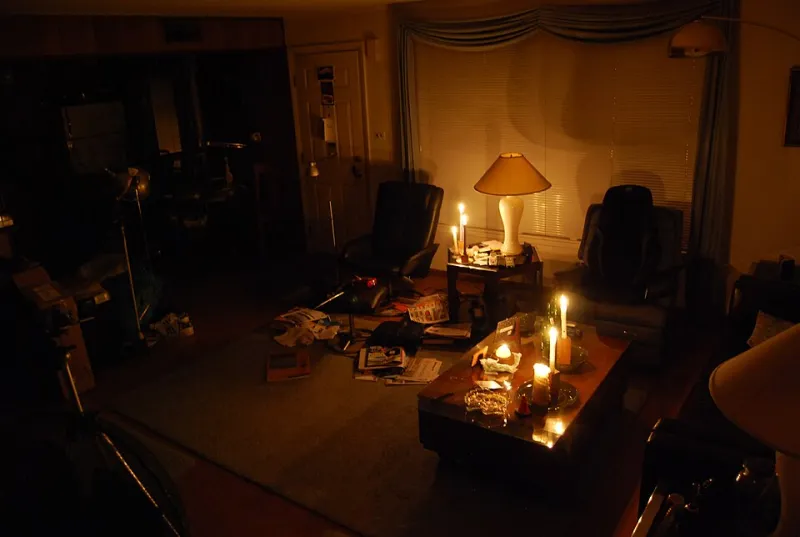
Photo: artistmac, CC BY-SA 2.0, via Wikimedia Commons
There is a particular kind of quiet that settles over a Nottinghamshire house when the power goes. No fridge hum, no boiler, no little green light on the thermostat. If you have underfloor heating, you also get the slow, slightly insulting realisation that the warm patch you were standing on ten minutes ago is now just... floor.
Outages around here are rarely dramatic. A substation fault in Mansfield, a tree down on an overhead line near Kneesall, a bit of flooding on a rural spur outside Southwell, and suddenly half a village is digging out torches. National Grid Electricity Distribution usually gets most people back within a few hours, but the odd winter event stretches to a day or more – and that is when UFH owners start worrying about pipes, pumps and whether the whole system will sulk when the power returns.
So let us walk through it calmly, in the order things actually happen.
First, which system have you got?
The answer changes everything. A wet system – pipes in a screed or in spreader plates under timber – moves heat around using water and a pump. An electric system uses heating mats or cable under tile or laminate, powered directly by the mains. They fail in completely different ways when the grid drops out, and the restart routine is not the same either.
If you are not sure which you have, a quick look at your consumer unit and the thermostat will tell you. A wet system will have a manifold somewhere – often a cupboard, sometimes a garage wall – and a thermostat that talks to a blending valve rather than directly to a heating element. Electric systems have a dedicated circuit, often with its own RCBO, and a floor probe.
Wet systems: your slab is a thermal battery, briefly
Here is the good news for anyone with a poured screed. That slab holds a serious amount of heat. In a typical Nottinghamshire home with 60–75mm of screed over pipes, you can expect the floor to stay noticeably warm for four to eight hours after the pump stops, depending on insulation below, room temperature and how cold it is outside. Add a well-insulated house and thick carpets and you might not notice much at all until mid-afternoon.
What you will lose immediately is control. No pump means no circulation, so no new heat goes into the slab, and the boiler or heat pump shuts down. Rooms with radiators upstairs cool far faster than the kitchen floor, which is why so many mixed systems feel oddly backwards during a blackout – cosy underfoot, chilly at the shoulders.
The real risk is not the slab. It is everything attached to it.
Electric mats: warm for twenty minutes, then just tile
Electric underfloor heating has almost no thermal mass behind it. Once the circuit dies, the surface temperature drops quickly – often within 30 to 60 minutes on a tiled bathroom floor. The mat itself is fine; there is nothing to damage. The irritation comes later, when the power returns and you discover the thermostat has lost its clock, forgotten its programme, or needs re-pairing with the app.
Smart controls are the usual culprit. Many of the WiFi and Zigbee thermostats sold over the last few years will boot back up at a default schedule – often 21°C morning and evening, which is not what you set. If your bathroom suddenly feels like a sauna the morning after an outage, that is why.
The risks that actually cost money
Frost is the headline. Most modern boilers have a built-in frost protection setting, but it needs power to work. If the power is off during a hard frost – and Nottinghamshire gets its share of -4°C nights on the clay and in the Trent valley – pipework in cold corners, garages and unheated extensions becomes vulnerable.
The most common winter call-out is not a burst pipe, though. It is a frozen condensate pipe. That plastic overflow from a condensing boiler often runs outside along a wall, and when it freezes the boiler locks out with an error code. Thaw it with warm water (not boiling), and it comes back to life.
Second on the list: a seized pump. Central heating pumps that sit idle for a long period can stick, especially older ones. When the power returns you may hear the boiler fire but no heat circulate. Many pumps have a large silver screw you can undo to free the spindle, but it is fiddly and wet. A magnetic filter and a bit of annual servicing reduce the odds.
Third: outbuildings. If your garden office or converted stable runs UFH from the house boiler, the pipe run out there is the bit most likely to freeze. Trace heating helps. Draining down before the cold snap helps more.
Your post-blackout restart checklist
Work through this in order and you will catch almost every problem before it becomes a call-out.
- Check the consumer unit. Look for a tripped RCBO on the UFH circuit specifically – power surges when the grid returns can trip it even if nothing is wrong.
- Reset the boiler. Look for a lockout light or fault code. Press reset once, wait, and if it locks out again, stop and call an engineer rather than pressing it repeatedly.
- Look at the condensate pipe. If it runs outside, check for ice. A jug of warm water along the pipe is usually enough.
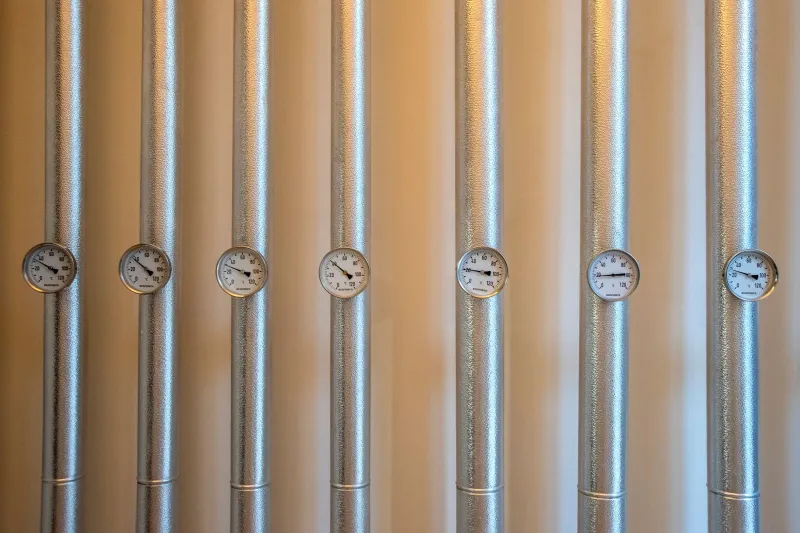
- Check the manifold and pump. Are the flow gauges showing movement? Is the pump warm or silent? If in doubt, turn the heating on and listen.
- Re-set your thermostats. Rebuild any holiday or setback schedules, and check app-connected controls have rejoined the network.
- Give the slab time. A wet system can take six to twelve hours to feel properly warm again after a cold start. Do not crank the thermostat to 28°C in frustration – it does not speed anything up and it overshoots later.
- Check frost stat settings on boilers serving garages or outbuildings.
Is backup power actually worth it?
For most households, a full battery storage system at four to eight thousand pounds is overkill purely to protect underfloor heating. But a small uninterruptible power supply wired to the boiler and pump is a different calculation. A boiler plus pump draws perhaps 100–200 watts, so a modest UPS costing £150–£400 can keep the heating circulating for several hours – long enough to bridge the typical outage and, crucially, keep frost protection alive.
A petrol generator is the other option, but it must be connected properly through a changeover switch by an electrician. Back-feeding a house with a lead is genuinely dangerous and can put linesmen at risk.
If you want a rule of thumb: prioritise the boiler and pump, not the floor. Keeping water moving and the boiler alive protects the fabric of the house. The warmth under your feet is a bonus.
The cheap insurance
Before the next named storm, spend an evening on the small stuff. Find your boiler's reset procedure and stick it inside a cupboard door. Lag the condensate pipe. Book a service. And keep one decent torch, a phone power bank and a couple of hot water bottles where you can actually find them in the dark.
Because the truth about blackouts in Notts is simple: your floor will go cold, and it will come back. The expensive damage is almost always in the bits you did not think to check.