Before the First Frost: An Afternoon's Worth of Underfloor Heating Checks That Can Save You Money

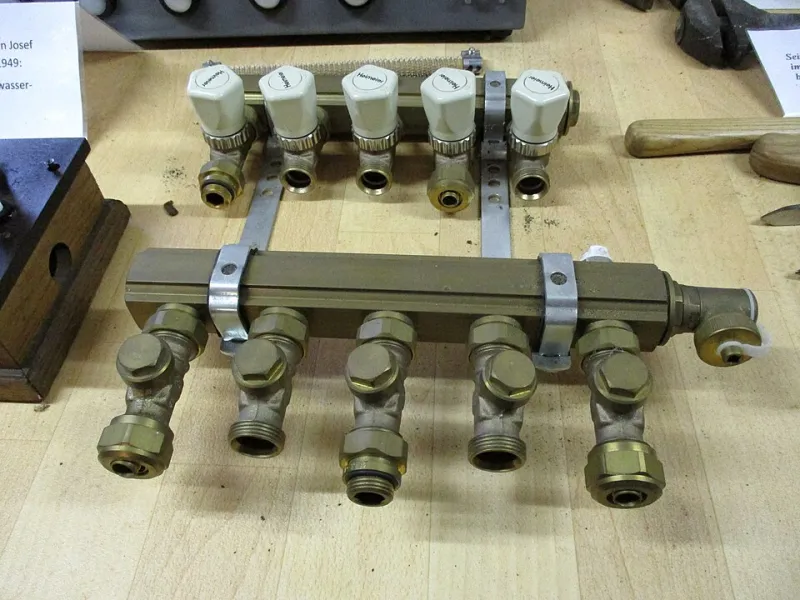
Photo: Chris Gorringe , CC BY-SA 2.0, via Wikimedia Commons
November in Nottinghamshire has a way of exposing heating problems. The clocks have gone back, the first frosts are in the forecast, and the underfloor heating that felt like a luxury in September is now doing proper work. If something is off, you will usually notice it now — a back bedroom that never quite gets there, a manifold cupboard that gurgles, or a thermostat that has crept up a degree at a time.
The good news is that many of the likely culprits are simple. You can check most of them in an afternoon with no more than a notebook, a torch and a bit of patience. Here is a practical once-over before the cold really settles in.
1. Start at the manifold, not the thermostat
The manifold is the control centre for a wet underfloor heating system, and it tells you more than any wall stat. Have a look at the flow temperature while the system is running. A well-insulated home with a properly designed wet system often runs at around 35–45°C flow temperature. Older, draughtier Nottinghamshire properties may need a little more, but if someone has cranked the blending valve up to 55°C or beyond to get things moving, that is worth questioning.
Higher flow temperatures can push a condensing boiler out of its most efficient range and encourage short cycling. Note the flow and return temperatures, and compare them with what the original design says. If you cannot find the design, a local installer can usually work it out.
2. Look for a zone that is not answering
If one room stays cold while the manifold pipes for that loop are hot, the problem may be an actuator — the small motorised head that opens and closes each loop. Actuators stick. They also fail quietly. A simple check is to see whether the actuator pin moves when the thermostat calls for heat. If it is stuck down or does not respond, the loop may be closed all day.
A replacement actuator is usually £40–£90 for the part, and around £80–£150 fitted depending on access and whether the wiring needs attention. It is not a job to bodge if you are not comfortable with mains wiring.
3. Cold patches mean air, sludge or a kink
A cold strip in the middle of a floor is a classic sign of trapped air, especially if the system was drained or altered over the summer. Bleeding a manifold is a DIY job on many systems, but it needs care. Check the flow gauges: if one loop is much lower than the others, air or a restriction is a likely cause.
In older systems, sludge can also reduce flow. A power flush is typically £300–£600 for a standard heating system, though underfloor-specific flushing can cost more. Do not assume a cold patch means a new floor is needed. Get the flow checked first.
4. Zoning mistakes and thermostat placement
A hallway thermostat next to the front door will feel every draught and every delivery. It may run the heating longer than the rest of the house needs. Similarly, a thermostat above a radiator, behind a sofa or in a sunny bay window will give misleading readings.
Check that each zone is actually set up the way you use the rooms. If you heat a spare bedroom every morning because it shares a zone with the landing, that is money spent for no reason. Smart thermostats and simple time schedules can help, but only if the zones make sense in the first place.
5. Rugs, runners and the heat trap
A thick rug over underfloor heating is a bit like putting a duvet over a radiator. The floor may be warm underneath, but the heat struggles to reach the room. If a room feels disappointing, lift the rug for an evening and see whether the floor warms more convincingly.
Runners in hallways are a common culprit. So are thick rubber-backed mats in kitchens. If you need a rug, choose a thinner one and avoid solid rubber or foam backing where you can.
6. Pressure, pump and strange noises
Check the pressure gauge on the boiler or manifold. A sealed heating system is often around 1–1.5 bar when cold, though your system may differ. If the pressure keeps dropping, do not simply keep topping it up. That can hide a leak or a failed expansion vessel.
Listen for gurgling, whooshing or a pump that sounds like it is labouring. A pump set to a fixed high speed can be noisier and less efficient than one on a smart or modulating setting. If you are not sure what the settings should be, ask an installer to check it during a service.
7. The thermostat itself
Sometimes the cheapest fix is the one hiding in plain sight. Wireless thermostats lose their connection. Batteries go flat. Sensors drift. A thermostat that is reading two degrees low will keep calling for heat long after the room is comfortable.
Replace batteries as a matter of course before winter. Check the app or receiver if you have one. If a room feels warm but the stat says otherwise, ask an installer to test the sensor rather than turning the set point up to compensate.
What is a DIY job and what is not
You can reasonably check thermostat batteries, lift rugs, note manifold temperatures, test whether each room reaches its set point and look for obvious leaks. Bleeding a manifold is fine if you know the system and have the right instructions.
Call a local installer for actuator replacement, manifold repairs, pressure loss, wiring, pump changes and anything that involves draining the system. As a rough guide: a service or health check might be £80–£150, an actuator swap £80–£150 fitted, and a power flush £300–£600. Prices vary by access and system type, so ask for a clear written quote.
A printable pre-winter checklist
- Note the manifold flow and return temperatures while the heating is running.
- Check every room reaches its set temperature within a reasonable time.
- Look for cold patches and compare loop flow gauges.
- Listen for gurgling, whooshing or a noisy pump.
- Check the system pressure when cold and note any recent drops.
- Test each thermostat and replace batteries where needed.
- Lift heavy rugs and runners in rooms that feel cool.
- Confirm pump and blending valve settings with the system notes.
- Book a service if you have not had one in the last two years.
- Write down any cold loops or stuck actuators before calling an installer.
Keep this by the boiler or in the folder with your system paperwork. A few notes now can save a lot of guesswork when the really cold weather arrives.