What Goes on Top Matters: How Floor Coverings Change Underfloor Heating Running Costs
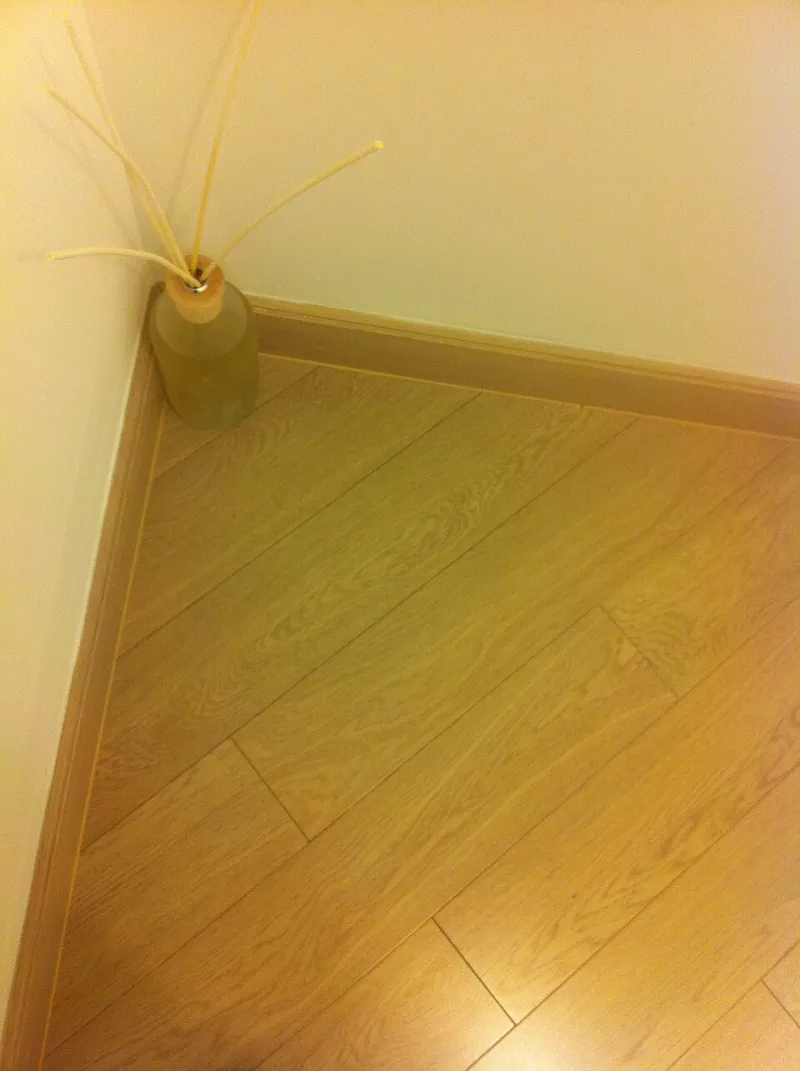
Photo: Keithmenorm, CC BY-SA 3.0, via Wikimedia Commons
You can spend a lot of money on a well-designed underfloor heating system and then undo some of the benefit with the wrong floor covering. It is one of the quietest cost decisions in a renovation: the flooring looks lovely in the showroom, the fitter lays it over the heating, and six months later the room feels slow to warm and the boiler seems to be on forever.
The issue is not magic. It is thermal resistance. Every material slows the passage of heat to some degree. Thick underlay, deep timber and rubber-backed products slow it a lot. Tile and glued-down vinyl slow it very little. If you are choosing a finish for a Nottinghamshire home, this is worth understanding before you fall for a particular plank or tile.
The one number that matters
Thermal resistance is measured in m²K/W. You do not need to memorise the physics. The practical rule is simple: lower is better for underfloor heating. A low-resistance finish lets heat pass from the pipe or mat into the room quickly. A high-resistance finish acts like a blanket, so the system has to run longer and at a higher temperature to deliver the same comfort.
Many underfloor heating manufacturers look for a total floor covering resistance of around 0.15 m²K/W or less, including any underlay or adhesive. Some accept a little more, but the further you go above that, the more you notice it in warm-up times and running costs. Always check the manufacturer's limit for your specific system.
Tiles and slate: the responsive choice
Porcelain, ceramic and slate are excellent over underfloor heating. They are dense, dimensionally stable and conduct heat well. Warm-up is typically 30–90 minutes, and the floor feels warm underfoot in a way that timber rarely does.
In Nottinghamshire, tiles are common in bathrooms and kitchens, and slate often suits older properties and hallways. The flooring itself might cost £30–£80 per square metre for porcelain or ceramic, and £50–£120 for slate, before adhesive, decoupling membranes and labour. Those are flooring costs, not heating costs, but they matter to the overall budget.
One watch-out: over low-profile retrofit boards, tile usually needs a suitable decoupling or backer board and flexible adhesive. Do not let a tiler treat it like a standard screed without checking the underfloor system.
Engineered oak: check the spec, not the showroom
Engineered oak is popular in West Bridgford semis, Edwalton new-builds and all points in between. It looks warm, it suits period and modern interiors, and it can work well over underfloor heating — but only if the board and the installation method are right.
A glued-down engineered oak board of around 14–15mm with a compatible adhesive is usually the better option. It keeps resistance lower and transfers heat more evenly. A thick floating board over a deep foam underlay is a different story: the underlay adds resistance, the floor feels slower, and the heating has to work harder.
Ask for the board's thermal resistance in writing. Avoid solid timber if the manufacturer does not approve it over underfloor heating. Engineered oak might cost £50–£120 per square metre depending on the wear layer and finish, before fitting.
LVT: glued-down is the difference
Luxury vinyl tile is a sensible choice for kitchens, hallways and bathrooms, and glued-down LVT performs well over underfloor heating. It is thin, stable and conducts heat reasonably quickly. Warm-up is often 30–90 minutes.
Floating LVT with a thick underlay is the problem child. Many click systems are not recommended over underfloor heating at all, and those that are usually specify a low-tog underlay and a maximum surface temperature. Glued-down LVT is generally the safer route if you want good heat transfer. Expect around £25–£60 per square metre for the flooring, plus adhesive and fitting.
Where homeowners get caught out
The first trap is thick underlay. A 10mm foam or felt underlay may feel luxurious, but it can smother heat output. The second is a floating floor that was sold as 'underfloor heating compatible' without anyone checking the total resistance of board plus underlay.
The third is adhesive compatibility over retrofit low-profile boards. Some boards have a foil or cement surface that needs a specific primer or adhesive. The fourth is carpet in bedrooms: if you must have it, keep the carpet and underlay tog rating low and accept that the room may warm more slowly.
Comparison table
| Finish | Typical thermal resistance | Warm-up over wet UFH | Effect on running costs | Good for | Watch out for |
|---|---|---|---|---|---|
| Porcelain or ceramic tile | Very low, around 0.01–0.02 m²K/W | 30–60 minutes | Low | Kitchens, bathrooms, hallways | Needs suitable adhesive and sometimes a decoupling membrane over retrofit boards |
| Slate | Low, around 0.02 m²K/W | 45–90 minutes | Low | Hallways, bathrooms, period homes | Heavier; check the subfloor and structure |
| Engineered oak, glued down | Moderate, around 0.08–0.12 m²K/W | 2–3 hours | Moderate | Living rooms, bedrooms | Must be approved for UFH; avoid thick insulating underlay |
| Engineered oak, floating over thick underlay | High, 0.18 m²K/W and up | 3–5 hours | High | Not ideal over UFH | Underlay can cut heat output noticeably |
| Glued-down LVT | Low, around 0.03–0.05 m²K/W | 30–90 minutes | Low | Kitchens, hallways, bathrooms | Check temperature limits and adhesive compatibility |
| Floating LVT with standard underlay | Moderate to high, 0.15 m²K/W plus | 2–4 hours | Moderate to high | Low-traffic rooms at a push | Many click systems are not recommended over UFH |
| Carpet with underlay | High, often 0.25 m²K/W plus | 3–5 hours | High | Bedrooms only, if you must | Keep total tog low; thick underlay is the enemy |
These figures are approximate. Always use the manufacturer's declared values for the exact product you are buying, including adhesive and underlay.
Matching finishes to rooms
Hallways need a hard-wearing finish that responds quickly to a cold front door opening. Tile or glued-down LVT are the sensible choices. Kitchens suit porcelain, ceramic or glued LVT because they handle spills and warm up fast. Bathrooms are best with tile or slate, and electric underfloor heating is often used for a small bathroom floor where a wet system is not practical.
Living rooms are where engineered oak earns its keep, but glue it down and keep the underlay out of the equation. Bedrooms are the hardest compromise: carpet feels nice but slows heat, so if you use it, choose a low-tog product and do not expect the same response as a tiled bathroom.
Retrofit low-profile boards: what actually works
Low-profile retrofit boards are designed to sit over existing floors with minimal height build-up. Over these boards, tile usually needs a backer or decoupling layer, engineered oak is best glued, and LVT should be glued rather than floated. A thick floating timber floor can easily add more height than the retrofit board saved, and it can add resistance at the same time.
If you are only heating one room, an electric mat may be simpler than extending a wet system. But the same floor-covering rules apply: check the mat's maximum temperature and the flooring manufacturer's approval before you commit.
Three questions to ask before you buy
Ask for the thermal resistance of the finished floor build-up in writing. Ask what maximum surface temperature the flooring manufacturer allows over underfloor heating. And ask whether the adhesive or underlay you plan to use is approved for that specific product. A good installer or flooring supplier will answer all three without flinching. If they cannot, keep asking — it is cheaper than discovering the problem in January.